
On 1st
June 2026 usage of domestically manufactured Solar Cells has been made mandatory for all Government backed projects, net metering projects and Open access Projects.
Reach out to Dyna with your project plan to know more details and how to maximize the direct cash subsidy on the CapEx and SGST Reimbursement.
With this mandate, many companies manufacturing the solar modules have integrated backwards towards cell manufacturing.
Furthermore, to provide impetus to Domestic Cell Manufacturing, the GOI has announced Performance Linked Incentive (PLI) scheme and to qualify for cash payouts under India’s Production-Linked Incentive (PLI) Scheme for High-Efficiency Solar PV Modules, manufacturers must clear mandatory thresholds across three core pillars: SCALE, TECHNOLOGY and LOCALIZATION.
While 'SCALE' makes it mandatory for the Manufacturers to set up a minimum of 1,000 MW (1 GW) capacity for their committed line. For qualifying for the PLI on 'TECHNOLOGY' mandate, Under Tranche-II, solar cells must hit a minimum efficiency baseline of 21.5% to 23.0% (depending on the technology category like PERC, TOPCon, or HJT). If a batch drops below this efficiency, it is disqualified from the incentive calculation.
For the third mandate - LOCALIZATION, Integrated Cell + Module plants must hit a minimum 50% to 60% DVA across the combined production line. To meet this, manufacturers must source local polysilicon/wafers or highly localize the cell raw materials—such as the silver paste, aluminum paste, and silicon gases. Sourcing these from Indian chemical vendors boosts the DVA score, while importing them reduces the eligible Central Government PLI payout.
In Addition to the Central Government PLI, Various State Governments provide additional 'TOP UP' CASH INCENTIVES. Many Indian states offer a 10% to 25% Capital Subsidy on fixed assets.
In Addition to the Central Government PLI, Various State Governments provide additional 'TOP UP' CASH INCENTIVES. Many Indian states offer a 10% to 25% Capital Subsidy on fixed assets.
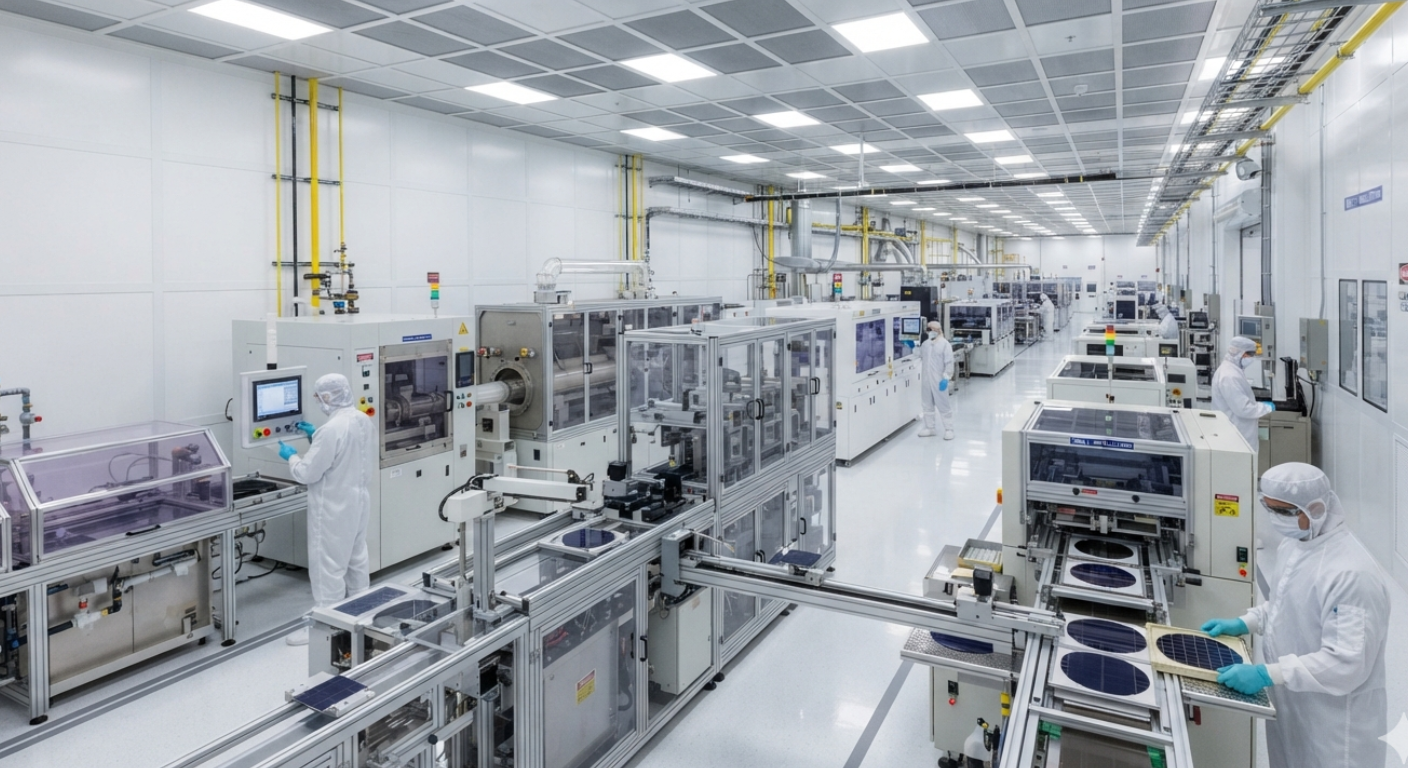
Procuring the cleanroom from Indian suppliers helps to satisfy the LOCAL VALUE ADDITION (LVA) mandate for these cash incentives.
Sourcing the cleanroom from Dyna is not just Capital Expenditure (CapEx), it is Eligible Fixed Capital Investment (eFCI). Unlike the central PLI (which excludes cleanrooms), State Industrial Policies generally treat your cleanroom (walls, HVAC, flooring, lights) as "Plant & Machinery" or "Industrial Infrastructure." This means every rupee the solar cell or module manufacturer spends, increases the Capital Subsidy cash payout they receive from the state government.
This essentially means that, depending on the state, sourcing the cleanroom from Dyna helps you get a 25% to 40% cash refund from the State Government.
This essentially means that, depending on the state, sourcing the cleanroom from Dyna helps you get a 25% to 40% cash refund from the State Government.
In some states Dyna's cleanrooms would also make you eligible for the full "SGST Reimbursement".
Reach out to Dyna with your project plan to know more details and how to maximize the direct cash subsidy on the CapEx and SGST Reimbursement.
sales@dynafilters.com | +91 89569 18417