

In modern research laboratories, pharmaceutical facilities, biotechnology centers, and infectious disease research institutes, safety is the highest priority. When working with highly dangerous pathogens, infectious microorganisms, and hazardous biological agents, conventional containment systems are not sufficient. This is where the Class III Biological Safety Cabinet (BSC) plays a critical role.
A Class III Biological Safety Cabinet is considered the highest level of biological containment available in laboratory environments. Designed specifically for Biosafety Level 4 (BSL-4) and critical Biosafety Level 3 (BSL-3) applications, these cabinets provide complete isolation between the operator and hazardous biological materials.
Dyna Filters manufactures advanced Class III Biological Safety Cabinets engineered to deliver maximum operator protection, product protection, and environmental safety. With gas-tight construction, negative-pressure containment, and advanced HEPA filtration systems, Dyna's cabinets ensure secure handling of the most dangerous biological substances used in scientific research and pharmaceutical development.
What is a Class III Biological Safety Cabinet?
A Class III Biological Safety Cabinet is a fully enclosed, gas-tight laboratory containment system designed for work involving highly infectious microorganisms and dangerous biological agents.
Unlike conventional biosafety cabinets where operators have direct access to the work area through an open front or sash opening, a Class III Biosafety Cabinet completely isolates hazardous materials inside a sealed chamber. All operations are performed through attached glove ports, eliminating direct contact between personnel and dangerous biological substances.
The cabinet operates under negative pressure to prevent contamination leakage. Air entering and leaving the cabinet passes through highly efficient HEPA filtration systems, ensuring complete containment of airborne contaminants.
Because of this superior level of protection, Class III Biosafety Cabinets are widely used in:
BSL-4 Research Laboratories
High-Risk BSL-3 Facilities
Pharmaceutical Research Centers
Vaccine Development Laboratories
Virology Laboratories
Biotechnology Research Facilities
Military and Biodefense Laboratories
Infectious Disease Control Centers
Why are Class III Biological Safety Cabinets Important?
Research involving pathogens such as Ebola virus, SARS virus, Anthrax bacteria, and other highly infectious agents requires absolute containment.
Any accidental release of biological material can pose serious risks to:
Laboratory personnel
Research samples
Facility environments
Public health
Surrounding ecosystems
A Class III Biological Safety Cabinet eliminates these risks by providing complete containment throughout laboratory operations.
The cabinet creates a secure barrier between the operator and hazardous agents, ensuring that biological materials remain isolated within the containment system at all times.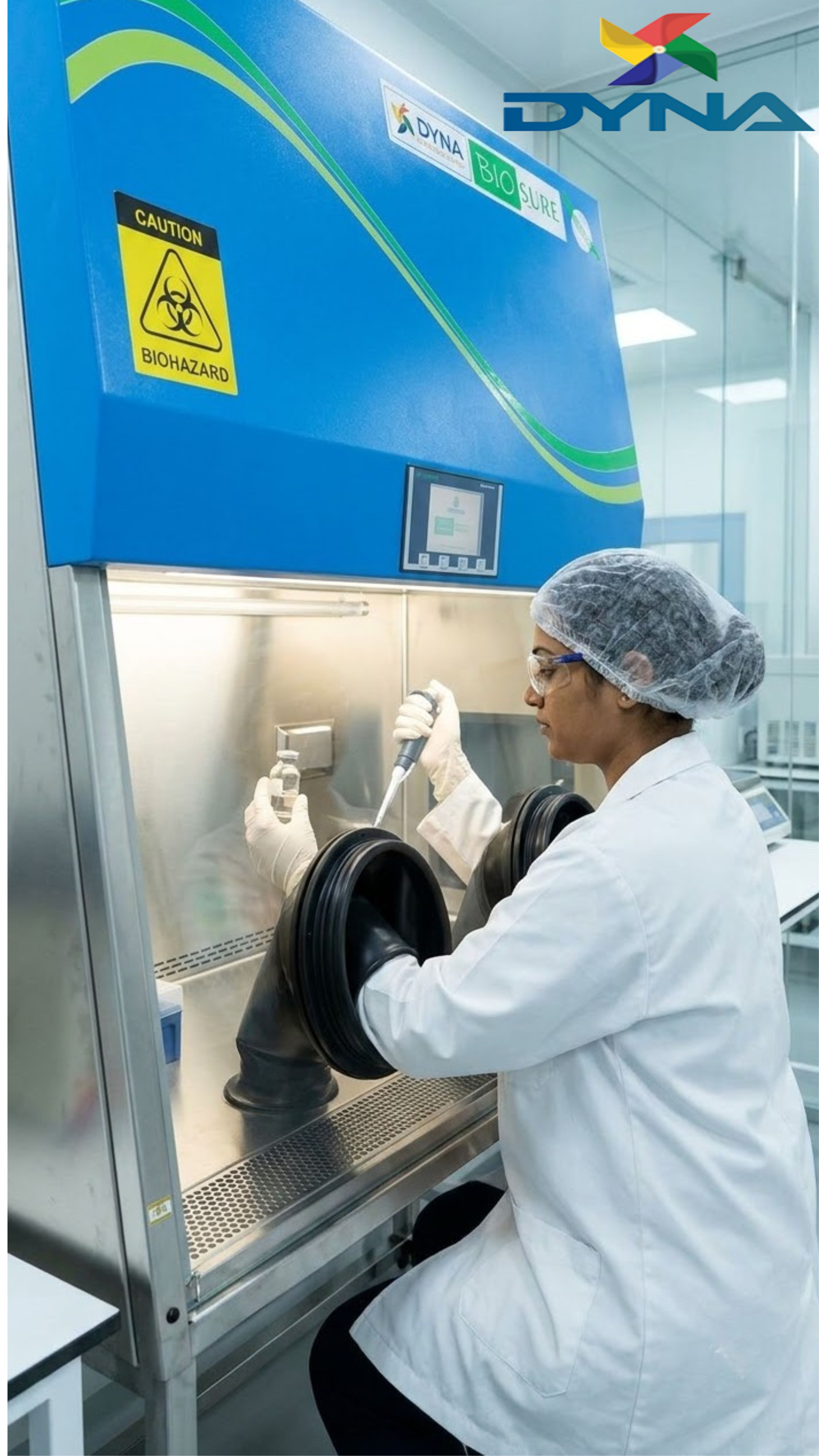
Key Features of Dyna Class III Biological Safety Cabinet
1. Gas-Tight Construction
The cabinet is built using a completely sealed stainless-steel structure designed to prevent leakage of hazardous particles, aerosols, and microorganisms.
This gas-tight construction ensures maximum containment and operator safety even during high-risk laboratory procedures.
2. Negative Pressure Containment
One of the most critical safety features of a Class III Biological Safety Cabinet is its negative-pressure operation.
The cabinet maintains lower pressure inside the work chamber compared to the surrounding environment. This ensures that if any leak occurs, air flows inward rather than allowing hazardous materials to escape.
Benefits include:
Enhanced operator protection
Reduced contamination risk
Compliance with global biosafety standards
Safe handling of dangerous pathogens
3. Dual HEPA Filtration System
Dyna Class III Biological Safety Cabinets utilize advanced HEPA filtration technology to ensure superior air cleanliness and containment.
The filtration system includes:
HEPA-filtered incoming air
Dual-stage HEPA-filtered exhaust air
This configuration effectively removes airborne contaminants before air is released into the environment.
Advantages include:
Maximum contamination control
Improved laboratory cleanliness
Reduced environmental risk
Reliable containment performance
4. 100% Air Exhaust System
Unlike recirculating systems, Class III Biosafety Cabinets exhaust all contaminated air through a hard-duct connection.
This 100% exhaust design ensures:
Complete removal of hazardous aerosols
Enhanced containment performance
Improved laboratory safety
Compliance with BSL-4 containment requirements
5. ISO 5 Clean Working Environment
The cabinet maintains an ISO Class 5 work environment, providing an ultra-clean workspace for sensitive research and pharmaceutical applications.
An ISO 5 environment minimizes particulate contamination and supports:
Sterile processing
Vaccine manufacturing
Pharmaceutical testing
Biological research activities
6. Glove Port Operation
Direct access to the work area is eliminated.
Operators perform all procedures using specially designed glove ports integrated into the cabinet.
Benefits include:
No direct exposure to biological hazards
Improved operator safety
Better contamination control
Secure handling of infectious materials
7. Pass Box Transfer System
Materials enter and exit the cabinet through dedicated pass boxes.
This eliminates the need to open the containment chamber and helps maintain biosafety integrity during laboratory operations.
Product Specifications
| Specification | Details |
|---|---|
| Biosafety Level | BSL-4 and High-Risk BSL-3 Applications |
| Cabinet Type | Fully Enclosed Gas-Tight Biosafety Cabinet |
| Air Exhaust | 100% Air Exhausted Through Hard Duct |
| Containment Method | Negative Pressure Operation |
| Access Method | Glove Ports and Pass Boxes |
| Work Environment | ISO Class 5 |
| Construction Material | Stainless Steel |
| Filtration System | Dual HEPA Exhaust Filtration |
| Safety Level | Maximum Personnel and Environmental Protection |
| Compliance Standards | EN 12469, NSF/ANSI 49, ISO 14644 |
Global Standards and Certifications
EN 12469 Certification
EN 12469 is one of the most recognized European standards for microbiological safety cabinets.
Compliance demonstrates:
Reliable containment performance
Effective operator protection
Consistent airflow management
High safety standards
NSF/ANSI 49 Compliance
NSF/ANSI 49 is a globally respected standard for biosafety cabinet performance.
It validates:
Airflow efficiency
Containment capability
Cabinet integrity
Safety performance
ISO 14644 Compliance
ISO 14644 establishes requirements for cleanroom environments and airborne particle control.
Compliance ensures:
Controlled contamination levels
Clean workspace conditions
Consistent air quality
Applications of Class III Biological Safety Cabinets
BSL-4 Research Laboratories
BSL-4 laboratories work with the world's most dangerous pathogens.
Examples include:
Ebola Virus
Marburg Virus
Nipah Virus
Highly infectious emerging diseases
Class III Biosafety Cabinets provide the highest level of containment required for these operations.
Pharmaceutical Research and Vaccine Development
Pharmaceutical organizations use Class III BSCs for:
Vaccine development
Drug discovery
Sterile biological processing
Clinical research
The cabinet protects both products and personnel during critical research activities.
Biotechnology Research
Biotechnology laboratories frequently handle:
Genetically Modified Organisms (GMOs)
Recombinant DNA materials
Cell culture research
Advanced biological experiments
The containment provided by Class III BSCs ensures safe experimentation and regulatory compliance.
Virology Laboratories
Virology researchers require controlled environments for studying infectious viruses.
Class III cabinets support:
Virus isolation
Viral characterization
Diagnostic research
Disease investigation
Military and Biodefense Facilities
National defense organizations utilize Class III Biological Safety Cabinets for:
Biodefense research
Biological threat assessment
Pathogen containment studies
National security programs
Animal Testing and Infectious Disease Control
Animal research facilities use Class III containment systems to safely manage infectious biological agents while protecting researchers and preventing environmental contamination.
Advantages of Choosing Dyna Class III Biological Safety Cabinet
Dyna Filters delivers high-performance containment systems designed for the most demanding laboratory environments.
Key advantages include:
Maximum biocontainment capability
Gas-tight stainless-steel construction
Negative-pressure containment technology
Dual HEPA filtration system
ISO 5 clean work environment
Global standards compliance
Long operational life
Low maintenance requirements
Superior operator safety
Reliable performance in critical applications
Why Dyna Filters?
Dyna Filters is among the leading manufacturers of cleanroom and contamination-control equipment in India. With extensive experience in air filtration, cleanroom engineering, and biosafety solutions, we provide products that meet international quality and safety standards.
Our commitment to innovation, engineering excellence, and customer support has made Dyna Filters a trusted partner for pharmaceutical companies, biotechnology firms, research laboratories, healthcare facilities, and industrial organizations across India and international markets.
Conclusion
A Class III Biological Safety Cabinet represents the highest level of laboratory containment available today. For organizations working with highly infectious pathogens, hazardous biological agents, and critical research applications, it provides unmatched protection for personnel, products, and the environment.
With gas-tight construction, negative-pressure containment, dual HEPA filtration, ISO 5 cleanliness, and compliance with global biosafety standards, Dyna Class III Biological Safety Cabinets offer a complete solution for advanced biological containment.
Whether for BSL-4 laboratories, pharmaceutical research, biotechnology development, virology studies, or biodefense applications, Dyna Filters delivers dependable biosafety solutions designed to meet the most demanding containment requirements.
